2025 Integration Policy Shifts: Social Program Access Impact

An Insider Look: How the Latest 2025 Integration Policy Shifts Impact Access to Social Programs by 15% reveals significant upcoming changes. These policy adjustments, slated for implementation in 2025, are set to redefine who qualifies for essential assistance and how benefits are distributed across various communities. Understanding these shifts now is crucial for those who rely on these programs.
Understanding the Core Policy Changes for 2025
The impending 2025 integration policy shifts mark a pivotal moment for social welfare systems. These changes, recently formalized, aim to streamline various programs, but not without significant consequences for beneficiaries. The core adjustments focus on revised eligibility criteria and a new framework for resource allocation.
Officials assert these modifications are designed to enhance efficiency and target resources more effectively. However, advocacy groups are raising concerns about the potential for increased barriers to access, particularly for vulnerable populations. The modifications stem from extensive legislative reviews conducted over the past year, culminating in a series of directives issued just last month.
Revised Eligibility Criteria
A primary component of the 2025 policy involves a complete overhaul of eligibility requirements for several key social programs. These revisions are expected to tighten the criteria, meaning a substantial number of current recipients may find themselves no longer qualifying for assistance.
- Income thresholds are being re-evaluated, potentially increasing the minimum income required to qualify.
- Asset limits will see stricter enforcement and lower caps, affecting individuals with modest savings or property.
- Documentation requirements are being expanded, demanding more comprehensive proof of need and residency status.
Projected 15% Impact on Social Program Access
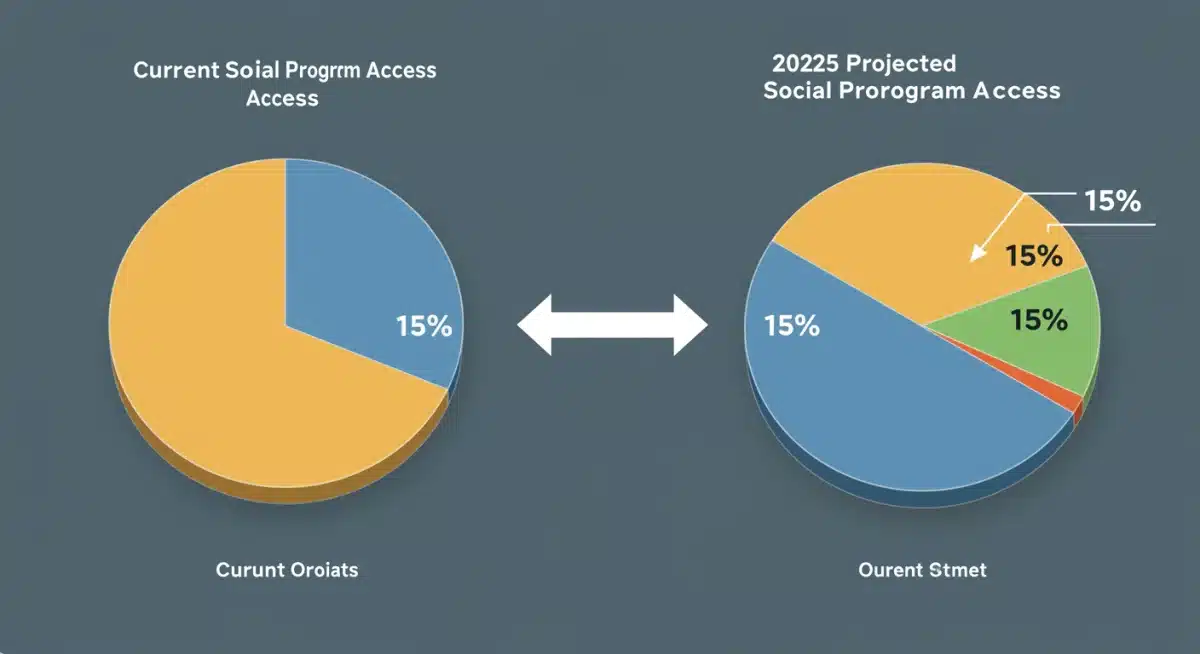
Analysts project a significant 15% reduction in overall access to social programs as a direct outcome of the 2025 integration policy shifts. This figure, derived from preliminary government impact assessments and independent research, indicates a substantial contraction in the reach of vital support systems. The reduction is not uniform across all programs but reflects an aggregate decline.
This anticipated decrease stems from the combined effect of stricter eligibility and procedural changes. The impact is expected to manifest in various ways, from fewer new applicants being approved to the disqualification of existing beneficiaries during routine reviews. The ripple effects could extend beyond direct program participation, affecting community services that rely on these federal and state-level programs.
The 15% projection underscores a critical challenge for policymakers: balancing fiscal responsibility with the imperative to support citizens in need. While proponents argue for long-term sustainability, critics highlight the immediate human cost of such a drastic reduction in access. The exact distribution of this impact across different demographics and regions is a key area of ongoing study.
Key Programs Affected by the New Policies
Several critical social programs are directly targeted by the 2025 integration policy shifts. These include, but are not limited to, housing assistance, food security initiatives, and certain unemployment benefits. Each program faces unique adjustments that will collectively contribute to the projected 15% reduction in access.
For instance, housing assistance programs will see a recalibration of subsidy levels and a prioritization of specific demographic groups, potentially reducing support for others. Food security initiatives are set to implement new work requirements for able-bodied adults without dependents, a change that could displace many current beneficiaries.
Housing Assistance Adjustments
The changes in housing assistance are multifaceted. They aim to reallocate resources to areas deemed most critically in need, based on new poverty metrics.
- Revised income-to-rent ratios will alter the amount of assistance provided.
- New application scoring systems prioritize applicants based on factors beyond just income, such as family size and disability status.
- The duration of temporary housing support may be shortened in some regions.
These modifications reflect a broader strategy to refine the target population for housing support, inevitably leading to a narrower scope of eligibility. The goal is to ensure that limited funds reach those in the most dire circumstances, according to official statements.
Timeline and Implementation Roadmap
The implementation of the 2025 integration policy shifts is structured across several phases, beginning in late 2024 with preparatory measures. The full operational rollout is slated for January 1, 2025, with specific deadlines for various program adjustments. This phased approach is designed to allow agencies and beneficiaries to adapt to the new regulations.
Initial steps involve extensive training for state and local administrators on the revised guidelines and updated technological systems. Public awareness campaigns are also expected to launch in the coming months, informing current and prospective beneficiaries about the impending changes. However, advocacy groups are urging for more robust communication strategies, citing concerns about potential information gaps.
The roadmap includes a review period in mid-2025 to assess the initial impact of the policies and make any necessary minor adjustments. This review, however, is not expected to reverse the core tenets of the policy shifts. Stakeholders are advised to closely monitor official announcements and consult with local support organizations for detailed guidance during this transition period.
Potential Socio-Economic Repercussions
The 2025 integration policy shifts carry substantial potential socio-economic repercussions, extending beyond direct program access. A 15% reduction in social program reach could exacerbate existing inequalities, increase poverty rates, and strain local community resources. The economic stability of many households, particularly those at the margins, hangs in the balance.
Economists warn that a decrease in social safety nets can lead to a rise in homelessness, food insecurity, and health crises, placing greater demands on emergency services. The shifts may also impact local economies as disposable income decreases for affected populations, reducing consumer spending in certain sectors. The long-term effects on labor force participation and educational attainment are also under scrutiny.
Community Impact Concerns
Local communities, often the first line of support for those affected, are bracing for increased pressure. Non-profit organizations and charities anticipate a surge in demand for their services, which may already be operating at capacity.
- Increased demand for food banks and shelters is highly probable.
- Local health clinics could see more uninsured patients seeking care.
- Educational support programs might face challenges as families struggle with basic needs.
These ripple effects highlight the interconnectedness of social programs with broader community well-being and economic stability. Addressing these potential repercussions will require coordinated efforts from various levels of government and community organizations.
Navigating the New Landscape: Advice for Beneficiaries
For individuals and families currently relying on social programs, or those who anticipate needing assistance, understanding and navigating the new landscape created by the 2025 integration policy shifts is paramount. Proactive engagement and seeking accurate information will be crucial to mitigating the impact of the projected 15% reduction in access.
Beneficiaries are strongly advised to review their current eligibility status against the updated criteria as soon as these are fully released. Gathering all necessary documentation in advance can help streamline any reapplication processes. Staying informed through official government channels and reputable advocacy organizations is also essential to understanding specific changes to individual programs.
Actionable Steps for Individuals
Taking immediate and informed action can make a significant difference in maintaining access to vital support.
- Contact local social service agencies for personalized guidance on the changes.
- Attend informational sessions or webinars hosted by government or non-profit groups.
- Begin compiling all financial, residency, and personal identification documents required for applications or reviews.
- Explore alternative local resources or community support networks that might fill potential gaps.
The coming months will be critical for preparation. Engaging with support systems and staying vigilant about policy updates will empower beneficiaries to better adapt to these significant shifts.
| Key Policy Area | Brief Description of Change |
|---|---|
| Eligibility Criteria | Stricter income and asset thresholds, expanded documentation requirements. |
| Access Impact | Projected 15% overall reduction in access to social programs. |
| Affected Programs | Primarily housing assistance, food security, and unemployment benefits. |
| Socio-Economic Risk | Potential increase in poverty, homelessness, and strain on community services. |
Frequently Asked Questions About the 2025 Policy Shifts
▼
The core changes involve stricter eligibility criteria for social programs, including revised income and asset thresholds. New documentation requirements and a re-evaluation of resource allocation methods are also central to these significant policy adjustments slated for 2025.
▼
Projections indicate a 15% reduction in overall access to social programs. This means fewer individuals may qualify for assistance, and some current beneficiaries could lose their benefits due to the tightened eligibility and new procedural requirements. The impact varies by program.
▼
Key programs expected to be significantly affected include housing assistance, food security initiatives, and certain unemployment benefits. Each of these will see specific adjustments in eligibility, benefit levels, or application processes, contributing to the overall access reduction.
▼
The full operational rollout of the 2025 integration policy shifts is scheduled for January 1, 2025. Preparatory measures, including administrative training and public awareness campaigns, are expected to commence in late 2024 to facilitate a smoother transition for all stakeholders.
▼
Beneficiaries should proactively review updated eligibility criteria, gather necessary documentation, and contact local social service agencies for personalized guidance. Staying informed through official government channels and advocacy groups is crucial to navigate the new policy landscape effectively.
What This Means
The 2025 integration policy shifts represent a fundamental reorientation of social support, with the projected 15% reduction in access posing significant challenges for countless individuals and families. This move signals a broader trend towards more targeted, and potentially more restrictive, welfare provisions. Stakeholders must now closely monitor the initial impact of these policies as they roll out, paying particular attention to how the changes affect vulnerable populations and the capacity of local support networks. Future adjustments, if any, will largely depend on these early assessments and the public’s response to the altered landscape of social assistance.
