Understanding 2025 American Rescue Plan Act Extensions: Benefits for 5 Million Households

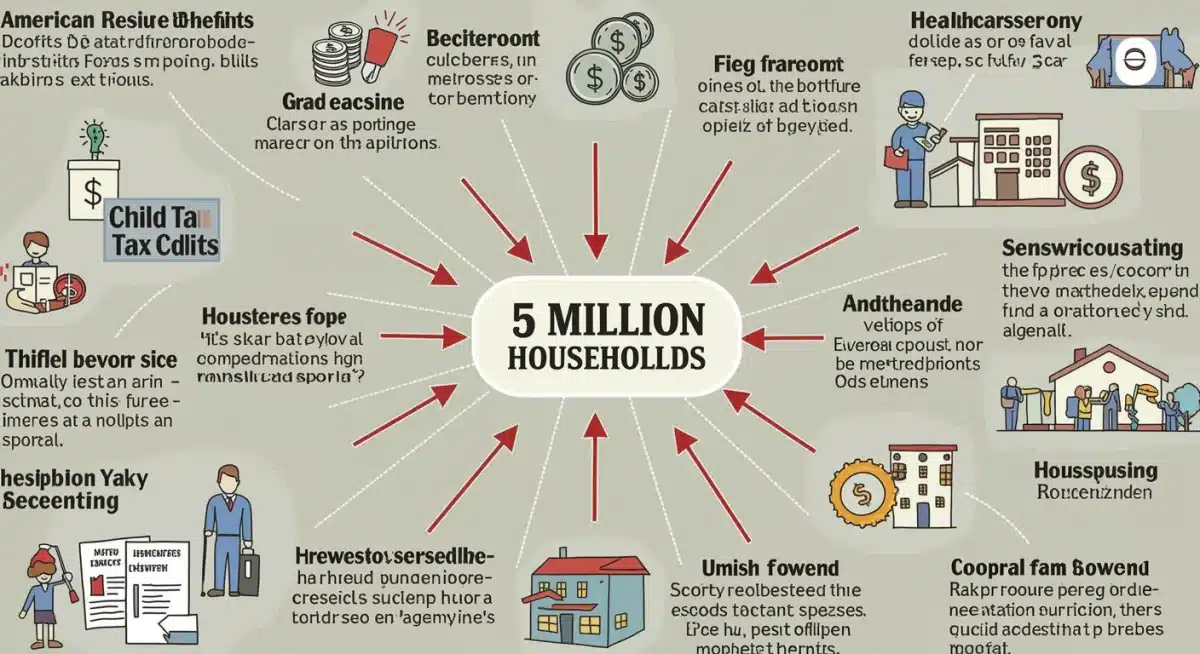
Recent extensions to the American Rescue Plan Act are poised to deliver significant benefits to an estimated 5 million households, reinforcing critical support across various economic and social sectors through 2025.
As of this week, crucial developments are unfolding regarding the 2025 American Rescue Plan Act Extensions: Benefits for 5 Million Households (RECENT UPDATES), signaling continued federal support for families and individuals nationwide. What do these extensions entail, and how will they impact millions of Americans?
Key Provisions Extended Under the ARP Act
The American Rescue Plan (ARP) Act, initially enacted in March 2021, provided a sweeping package of economic relief designed to help the nation recover from the COVID-19 pandemic. Recent legislative actions are now extending several of these vital provisions into 2025, ensuring that millions of households continue to receive much-needed support. These extensions are not merely a continuation but a targeted effort to address ongoing economic disparities and consolidate recovery efforts.
According to recent reports from congressional committees, the focus of these extensions centers on areas proven to have immediate and substantial impact on household stability. This includes enhancements to healthcare affordability, housing assistance, and specific tax credits that directly benefit low- and middle-income families.
Healthcare Subsidies Under the Spotlight
One of the most significant extensions concerns the enhanced premium subsidies for health insurance purchased through the Affordable Care Act (ACA) marketplaces. These subsidies make health coverage more affordable by reducing monthly premiums for eligible individuals and families. The extension into 2025 means that millions of Americans will continue to see lower healthcare costs, preventing a potential surge in uninsured rates.
- Expanded Eligibility: More households now qualify for subsidies, including those earning above 400% of the federal poverty line.
- Increased Savings: Many individuals and families pay significantly less for their health insurance premiums.
- Broader Access: This ensures continued access to essential health services for vulnerable populations.
The impact of these extended subsidies is particularly critical for the approximately 5 million households that rely on these financial aids to maintain their health coverage. Without these extensions, many would face unaffordable premiums, leading to a rise in uninsured individuals and increased financial strain on households already struggling with rising living costs.
Impact on Child Tax Credit and Family Support
While the expanded Child Tax Credit (CTC) from the original ARP Act largely expired at the end of 2021, recent discussions and proposed legislation indicate a renewed push for certain enhancements to be extended or reintroduced for 2025. These potential changes aim to provide additional relief to families, particularly those with young children, acknowledging the persistent financial challenges many still face.
The original expanded CTC significantly reduced child poverty, and advocates are pressing for a partial return to those more generous terms. Any extension or modification would likely focus on making the credit fully refundable and potentially increasing the maximum amount for certain age groups, directly benefiting millions of children and their families.
Targeted Aid for Vulnerable Families
Discussions in Congress, as reported by the Congressional Budget Office (CBO), suggest that any renewed CTC provisions would be highly targeted to ensure maximum impact on vulnerable households. This approach aims to provide direct financial assistance where it is most needed, helping families cover essential expenses such as food, housing, and childcare.
- Poverty Reduction: A key objective is to continue the significant strides made in reducing child poverty rates.
- Economic Stability: Direct payments can stabilize family budgets and stimulate local economies.
- Child Development: Improved financial security for families can lead to better outcomes for children in health and education.
The potential reintroduction or extension of components of the expanded Child Tax Credit would represent a substantial win for millions of families. It underscores a broader commitment to supporting household economic stability and ensuring that children have access to the resources they need to thrive. The specifics are still being debated, but the direction indicates a strong desire to bolster family financial health.
Housing Assistance and Rental Relief Continuations
The American Rescue Plan Act included substantial funding for housing assistance programs, notably the Emergency Rental Assistance (ERA) program. While much of this funding has been disbursed, recent extensions and reallocations are ensuring that support for housing stability continues into 2025, albeit with a more focused approach. These efforts are crucial given the ongoing challenges in the housing market, including rising rents and limited affordable housing options.
State and local governments, utilizing remaining and newly allocated federal funds, are prioritizing programs that prevent homelessness and provide long-term housing solutions. This includes not only direct rental assistance but also support for utility payments, housing counseling, and rapid re-housing initiatives, as confirmed by HUD advisories.
Addressing Housing Insecurity
The continuity of housing support is vital for millions of households that are still recovering from economic disruptions. The extensions are designed to bridge gaps in assistance and ensure that individuals and families can maintain stable housing, a fundamental component of overall well-being and economic recovery.
- Eviction Prevention: Continued funding helps tenants avoid eviction, maintaining housing stability.
- Utility Assistance: Support for utility bills eases financial burdens on low-income households.
- Affordable Housing Initiatives: Some funds are directed towards creating and preserving affordable housing units.
The Department of the Treasury’s recent guidance emphasizes flexibility for states and localities in utilizing these funds, allowing them to tailor programs to meet specific local needs. This adaptive approach ensures that housing assistance remains effective and reaches the most vulnerable populations, reinforcing the foundational aspect of the 2025 American Rescue Plan Act Extensions: Benefits for 5 Million Households (RECENT UPDATES).
Small Business Support and Economic Recovery
Beyond direct household aid, the American Rescue Plan Act also allocated significant resources to support small businesses, recognizing their critical role in economic recovery and job creation. While many initial programs, like the Paycheck Protection Program (PPP), have concluded, the extensions maintain support through other mechanisms, focusing on access to capital and business development for underserved communities into 2025.
Reports from the Small Business Administration (SBA) indicate a shift towards programs that foster long-term growth and resilience. This includes enhanced funding for community financial institutions (CFIs) and technical assistance providers, ensuring that small businesses, particularly those owned by women and minorities, can access the resources needed to thrive.
Facilitating Access to Capital
Many small businesses, especially those in economically disadvantaged areas, continue to face challenges in accessing traditional financing. The extended provisions aim to address these disparities by strengthening programs that provide capital, counseling, and contracting opportunities.
- SBA Loan Programs: Continued enhancements to existing SBA loan programs facilitate easier access to financing.
- Technical Assistance: Funding for business counseling and training helps entrepreneurs navigate complex economic landscapes.
- Equity Investments: Support for venture capital and equity funds targeting small businesses promotes innovation and growth.
The ongoing commitment to small business support under the ARP Act extensions is crucial for sustaining the broader economic recovery. By ensuring that small businesses have the tools and resources they need, these extensions contribute to job creation, local economic vitality, and overall community resilience, directly benefiting millions of individuals through employment and local services.
Broadening Access to Food and Nutritional Assistance
The American Rescue Plan Act significantly bolstered food and nutritional assistance programs, recognizing the heightened food insecurity experienced by many households during and after the pandemic. While some emergency allotments have phased out, the extensions into 2025 aim to strengthen the core infrastructure of these programs and enhance access for eligible families.
The U.S. Department of Agriculture (USDA) has recently announced initiatives, supported by continued ARP Act funding, to modernize the Supplemental Nutrition Assistance Program (SNAP) and expand access to healthy food options. This includes investments in technology to streamline application processes and support for farmers’ markets and community-based food programs.
Strengthening the Food Safety Net
Ensuring that all Americans have access to nutritious food remains a top priority. The extended provisions are designed to create a more robust and responsive food safety net, capable of addressing both chronic and acute food insecurity.
- SNAP Modernization: Streamlined application processes and digital access improve program efficiency.
- Increased Benefits: Adjustments to benefit calculations ensure adequate support for families facing higher food costs.
- Community Partnerships: Funding for local food banks and community programs strengthens food distribution networks.
These enhancements are particularly impactful for the millions of households that rely on these programs to put food on the table. The continued investment in food and nutritional assistance through the 2025 American Rescue Plan Act Extensions: Benefits for 5 Million Households (RECENT UPDATES) underscores a commitment to public health and economic equity, ensuring that basic needs are met for the most vulnerable segments of the population.
What These Extensions Mean for Your Household
Understanding the implications of the 2025 American Rescue Plan Act extensions is crucial for the millions of households potentially impacted. These recent updates signify a continued federal commitment to economic stability and social welfare, providing a safety net in key areas such as healthcare, housing, and family support. The extensions are not uniform across all original ARP Act provisions, but rather represent a strategic continuation of the most impactful and necessary components.
For individual households, these extensions translate into tangible benefits. This could mean lower monthly health insurance premiums, continued access to rental or utility assistance, or potentially renewed enhancements to child tax credits. Staying informed about eligibility criteria and application processes through official government channels is essential to leverage these opportunities.
Navigating Eligibility and Resources
With multiple provisions being extended or modified, it is important for households to actively seek out information tailored to their specific circumstances. Government websites, local social service agencies, and community organizations are excellent resources for understanding eligibility requirements and how to access available benefits.
- Official Websites: Check federal and state government sites for the latest updates on program eligibility and application deadlines.
- Community Resources: Local non-profits and social service agencies often provide direct assistance and guidance.
- Financial Advisors: Consulting with a financial advisor can help clarify the tax implications and overall financial benefits.
The ongoing nature of these benefits underscores the government’s recognition of persistent economic challenges. These extensions are designed to provide a sustained boost to household finances, contributing to a more stable and equitable recovery for the approximately 5 million households targeted by these vital provisions. It is a proactive measure to ensure that the progress made thus far is not eroded by new or lingering economic pressures.
| Key Point | Brief Description |
|---|---|
| Healthcare Subsidies | Enhanced ACA premium subsidies extended into 2025, lowering healthcare costs for millions of households. |
| Child Tax Credit | Potential reintroduction or extension of expanded Child Tax Credit components for 2025, boosting family income. |
| Housing Assistance | Continued funding for rental and utility assistance programs to ensure housing stability for vulnerable groups. |
| Small Business Support | Focused support for small businesses, especially in underserved communities, through access to capital and technical assistance. |
Frequently Asked Questions About ARP Act Extensions
Key extended provisions primarily include enhanced premium subsidies for Affordable Care Act health insurance, ongoing housing and rental assistance programs, and potentially renewed components of the Child Tax Credit. These extensions aim to continue vital support for millions of American households.
An estimated 5 million households are projected to directly benefit from the 2025 American Rescue Plan Act extensions. This includes families receiving healthcare subsidies, housing aid, and those who may qualify for renewed child tax credit enhancements, ensuring broad economic relief.
While the full expanded Child Tax Credit from 2021 is unlikely to be fully reinstated, legislative discussions are ongoing regarding partial reintroductions or targeted enhancements for 2025. Any changes would likely focus on making the credit fully refundable for low-income families.
Households can find eligibility information on official government websites, such as those for the Department of Health and Human Services, HUD, and the IRS. Local social service agencies and community organizations also provide up-to-date guidance and assistance for accessing available programs.
The extensions provide continued support for small businesses through enhanced access to capital via SBA loan programs, technical assistance, and funding for community financial institutions. These measures aim to foster long-term growth and resilience, particularly for businesses in underserved communities.
What Happens Next
The unfolding scenario around the 2025 American Rescue Plan Act extensions highlights a dynamic policy landscape. As these provisions solidify, federal agencies will issue more detailed guidance on implementation, eligibility, and application processes. Households and small businesses should monitor official government announcements and local resource centers for critical updates. The continuity of these benefits underscores an adaptive approach to economic recovery, with an eye towards sustaining gains and addressing persistent vulnerabilities. Expect further legislative activity and administrative clarifications in the coming months, shaping the precise impact on millions nationwide.
