Navigating 2025 Digital ID Verification: A 5-Step Guide to Secure Online Access

Navigating 2025 Digital ID Verification: A 5-Step Guide to Secure Online Access (PRACTICAL SOLUTIONS) provides essential strategies for individuals and organizations to establish robust, secure online identities, crucial for future digital interactions and regulatory compliance.
The landscape of online security is rapidly evolving, making robust identity verification more critical than ever. As we approach 2025, understanding and implementing effective strategies for Navigating 2025 Digital ID Verification: A 5-Step Guide to Secure Online Access (PRACTICAL SOLUTIONS) is paramount for both individuals and organizations. This guide offers practical steps to fortify your digital presence against emerging threats and comply with new regulations.
Understanding the Evolving Digital ID Landscape
The digital identity ecosystem is undergoing significant transformation, driven by technological advancements and heightened cybersecurity concerns. In 2025, we anticipate a more pervasive adoption of digital ID solutions, moving beyond traditional password-based systems. This shift is not merely about convenience; it is a fundamental re-architecture of how trust is established in the digital realm. Governments, financial institutions, and tech giants are all investing heavily in secure, interoperable digital ID frameworks.
Recent developments highlight the urgency of this evolution. Data breaches continue to expose millions of personal records, underscoring the vulnerabilities of current systems. Simultaneously, regulatory bodies worldwide are pushing for stronger identity assurance, aiming to combat fraud and enhance data privacy. This dual pressure creates a dynamic environment where understanding the nuances of digital ID is no longer optional but essential for secure online access.
Key Drivers of Change
Several factors are propelling the rapid evolution of digital ID verification.
- Increased Cyber Threats: Sophisticated phishing attacks, identity theft, and synthetic identity fraud are on the rise, necessitating more robust verification methods.
- Regulatory Imperatives: New data protection laws and anti-money laundering (AML) regulations demand higher standards for identity proofing and ongoing authentication.
- Technological Advancements: Biometrics, blockchain, and artificial intelligence are enabling more secure and user-friendly verification processes.
Step 1: Embrace Multi-Factor Authentication (MFA) and Biometrics
The foundation of secure digital identity in 2025 lies in moving beyond single-factor authentication. Multi-Factor Authentication (MFA) adds layers of security, requiring users to provide two or more verification factors to gain access. Biometric authentication, utilizing unique physical or behavioral characteristics, is becoming a cornerstone of this approach, offering both enhanced security and improved user experience.
Implementing MFA is a critical first step. This typically involves combining something you know (like a password), something you have (like a phone or hardware token), and something you are (like a fingerprint or facial scan). For organizations, mandating MFA across all critical systems significantly reduces the risk of unauthorized access. For individuals, enabling MFA on all online accounts is a non-negotiable security practice.
Biometric Integration
Biometrics offer a powerful and convenient method for identity verification. Technologies like facial recognition, fingerprint scanning, and iris scanning are increasingly accurate and widely available on consumer devices. As these technologies mature, their integration into digital ID solutions will become more seamless and secure.
- Enhanced Security: Biometric data is inherently difficult to replicate or steal, providing a strong defense against impersonation.
- Improved User Experience: Eliminating the need to remember complex passwords can streamline the login process, making secure access less cumbersome.
- Liveness Detection: Advanced biometric systems now incorporate liveness detection to prevent spoofing attempts using photos or masks.
Step 2: Prioritize Data Privacy and Consent Management
As digital ID systems collect and process sensitive personal information, prioritizing data privacy and establishing robust consent management mechanisms are paramount. In 2025, users will demand greater control over their data, and regulatory frameworks will enforce stricter rules on how data is collected, stored, and shared. Organizations must adopt a privacy-by-design approach, embedding privacy protections into the very architecture of their digital ID solutions.
Transparency is key. Users must be clearly informed about what data is being collected, why it is necessary, and how it will be used. They should also have the ability to grant or revoke consent easily. Implementing granular consent controls allows users to specify exactly what information they are willing to share, fostering trust and compliance.
Implementing Privacy-by-Design Principles
Adopting privacy-by-design ensures that data protection is not an afterthought but an integral part of the development process.
- Data Minimization: Collect only the data absolutely necessary for the verification process, reducing the risk exposure.
- Purpose Limitation: Ensure collected data is used only for the specified purpose for which consent was given.
- Secure Storage and Processing: Implement strong encryption, access controls, and auditing to protect stored identity data.
Step 3: Leverage Decentralized Identity (DID) Solutions
Decentralized Identity (DID) represents a paradigm shift in how digital identities are managed, empowering individuals with greater control over their personal data. Unlike traditional centralized systems where a single entity controls your identity, DID leverages blockchain technology to create self-sovereign identities. In 2025, DID solutions are poised to gain significant traction as a means of enhancing security, privacy, and user autonomy.
With DID, users own and manage their digital identifiers, choosing what information to share and with whom, without relying on a central authority. This reduces the risk of large-scale data breaches, as there is no single honeypot of personal information for attackers to target. Verifiable Credentials (VCs), a core component of DID, allow individuals to present digitally signed proof of their attributes (e.g., age, qualifications) in a secure and privacy-preserving manner.
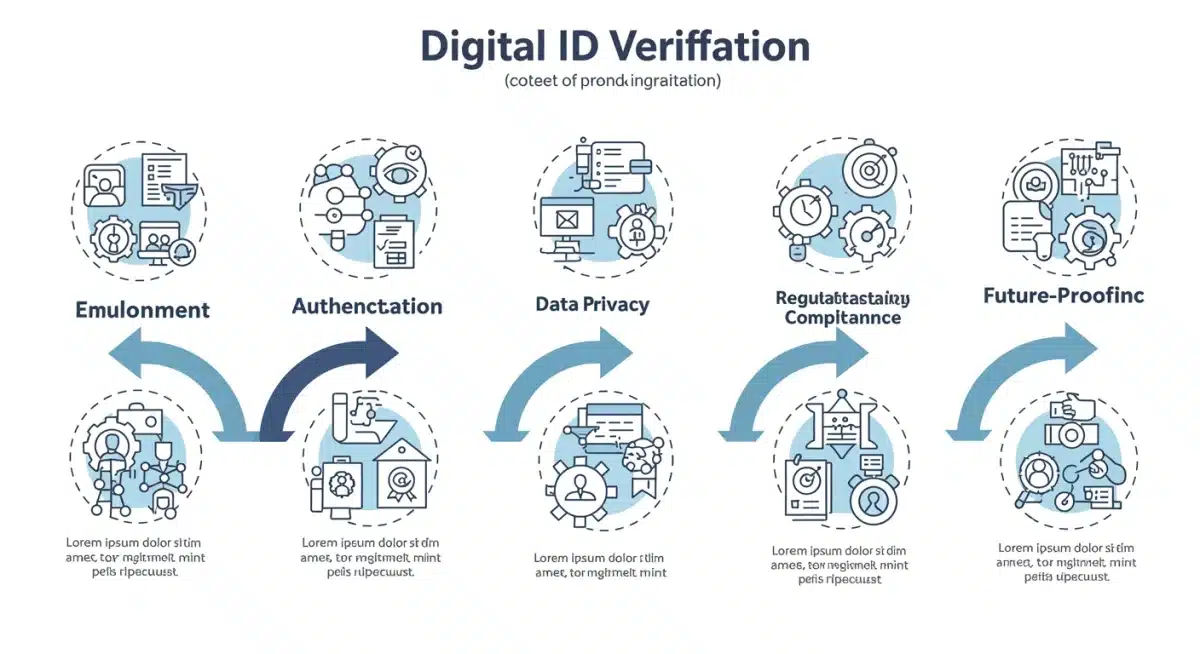
Benefits of Decentralized Identity
DID offers several compelling advantages over traditional identity models.
- Enhanced Privacy: Users control their data, sharing only what’s necessary for a specific interaction.
- Improved Security: Eliminates central points of failure, making identity systems more resilient to attacks.
- Greater Interoperability: Standardized DID frameworks can facilitate seamless identity verification across different platforms and services.
Step 4: Stay Informed on Regulatory Compliance
The regulatory landscape for digital identity is constantly evolving, with new laws and standards emerging to address privacy, security, and interoperability. Staying informed and ensuring compliance with these regulations is a critical step for secure online access in 2025. Non-compliance can lead to significant penalties, reputational damage, and loss of user trust. Key regulations like GDPR, CCPA, and emerging national digital identity frameworks are shaping how organizations handle personal data and verify identities.
Organizations must establish clear internal policies and procedures to ensure adherence to relevant identity verification and data protection laws. This includes regular audits, employee training, and ongoing monitoring of regulatory changes. For individuals, understanding your rights under these regulations empowers you to make informed decisions about your digital identity.
Key Regulatory Frameworks
Understanding these regulations is crucial for both individuals and businesses.
- General Data Protection Regulation (GDPR): Mandates strict rules on data collection, processing, and storage within the EU, impacting global businesses.
- California Consumer Privacy Act (CCPA): Grants California consumers extensive rights regarding their personal information.
- National Digital Identity Schemes: Many countries are developing their own secure digital identity programs, which will impact cross-border verification.
Step 5: Implement Continuous Authentication and Fraud Detection
Beyond initial identity verification, continuous authentication and sophisticated fraud detection mechanisms are essential for maintaining secure online access in 2025. Traditional methods often rely on a single authentication event at login. However, real-time threats necessitate ongoing monitoring and adaptive authentication throughout a user’s session. This proactive approach helps detect anomalies and potential compromises as they occur, rather than after the fact.
Continuous authentication uses behavioral biometrics, device intelligence, and contextual data to verify a user’s identity silently and persistently. For example, if a user’s typing rhythm or mouse movements suddenly change, or if they attempt to access sensitive data from an unfamiliar location, the system can prompt for re-authentication or flag the activity as suspicious. Integrating AI and machine learning into these systems enhances their ability to identify complex fraud patterns that might elude traditional rules-based detection.
Advanced Fraud Detection Techniques
Leveraging cutting-edge technologies is vital for combating evolving fraud tactics.
- Behavioral Biometrics: Analyzes unique user behaviors like keystroke dynamics, mouse movements, and navigation patterns to confirm identity.
- AI and Machine Learning: Identifies suspicious activities and fraud patterns in real-time by analyzing vast datasets of user interactions.
- Risk-Based Authentication: Adjusts the level of authentication required based on the perceived risk of an action or transaction, providing a balance between security and user experience.
| Key Point | Brief Description |
|---|---|
| MFA & Biometrics | Essential for layered security, combining something you know, have, and are (e.g., fingerprint). |
| Data Privacy | Prioritize privacy-by-design and clear consent management for sensitive identity data. |
| Decentralized ID | Empowers users with self-sovereign control over their digital identifiers via blockchain. |
| Continuous Authentication | Monitors user behavior and context in real-time to detect and prevent fraud during sessions. |
Frequently Asked Questions About Digital ID Verification in 2025
Digital ID verification is the process of confirming an individual’s identity online, often using digital credentials and biometrics. It’s crucial for 2025 due to increasing online fraud, evolving regulatory demands for data protection, and the need for seamless, secure online access across various services.
Biometrics, such as fingerprints or facial recognition, enhance digital ID security by using unique physical characteristics that are difficult to counterfeit. They add an intrinsic layer of authentication, making it much harder for unauthorized users to gain access compared to traditional password-only systems, while also improving user convenience.
Decentralized Identity (DID) offers enhanced privacy by giving users control over their data, improved security by eliminating central points of failure, and greater interoperability across platforms. It reduces the risk of large-scale data breaches and empowers individuals to manage their digital personas independently.
Regulatory compliance is vital because it ensures digital ID systems meet legal requirements for data protection, privacy, and anti-fraud measures. Adherence to regulations like GDPR or CCPA helps avoid hefty penalties, maintains user trust, and protects sensitive personal information from misuse or unauthorized access.
Continuous authentication involves ongoing verification of a user’s identity throughout an online session, not just at login. It uses behavioral biometrics, device data, and contextual clues to detect anomalies and potential fraud in real-time, providing an adaptive security layer beyond initial authentication events.
What Happens Next
As we move closer to 2025, the emphasis on robust digital ID verification will only intensify. The convergence of advanced biometrics, decentralized identity frameworks, and AI-driven fraud detection is creating a more secure yet complex environment. Organizations must proactively adapt to these changes, not just to comply with regulations, but to build lasting trust with their users. Individuals, in turn, need to become more aware of their digital footprint and adopt best practices for safeguarding their online identities. The next few years will see increased standardization efforts and the emergence of more user-friendly, privacy-enhancing solutions, fundamentally reshaping how we interact with the digital world.
